
The problem: still water, bad smell, fish stress
Stagnant ponds cause trouble fast. Algae blooms, unpleasant odor, mosquito breeding, and low dissolved oxygen stress fish and plants. For many property managers or backyard owners, the surprise comes after a hot season when water goes slimy. The simple remedy is better circulation and aeration — sometimes a floating fountain plus a reliable water aerator for pond is exactly what the water needs.
Why floating fountains plus aeration work
Floating fountains do two jobs at once: they move surface water and add oxygen through visible spray patterns. Aeration systems — whether diffusers or surface pumps — raise dissolved oxygen (DO) and help destratify the pond so the whole volume gets circulation. For large bodies, using floating fountains for large ponds often gives immediate aesthetic win and measurable water-quality improvement. That combo reduces harmful anaerobic zones and slows blue-green algae growth because water, oxygen, and light interact differently when circulation improves.
Picking the right gear: simple specs to check
Keep it practical. Look at pump horsepower and flow rate first — these decide spray height and circulation reach. For aeration, choose diffusers sized for your pond volume and expected oxygen demand. Consider placement: fountains work best near edges with shallow inlets; diffusers sit where circulation is weak. Also check electrical safety and weatherproofing for outdoor use. If you keep numbers in your notes, target a DO above 5 mg/L for fish-friendly ponds, and size pump horsepower to maintain surface turnover every few hours on mid-sized ponds.
Installation realities and common mistakes
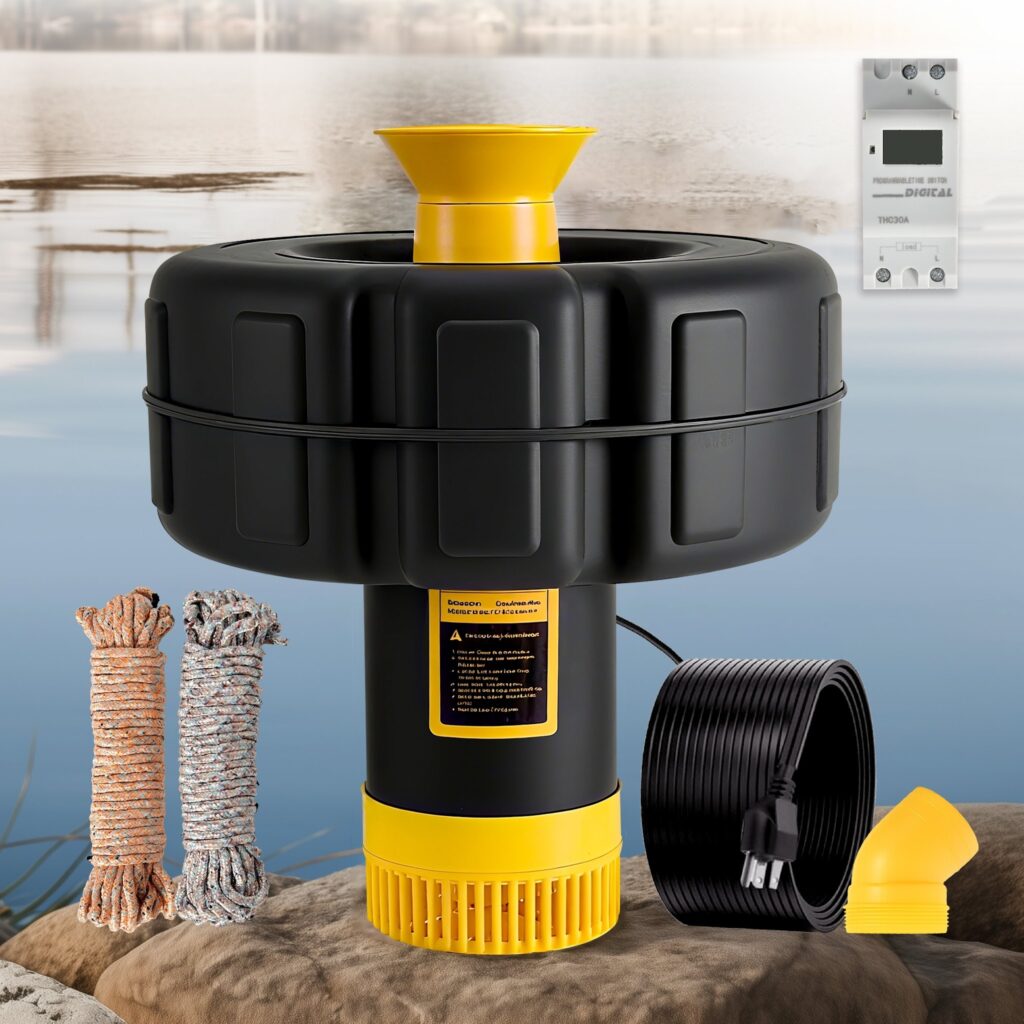
People often under-estimate anchoring and seasonal variation — you must anchor float properly or the fountain drifts and clogs intake. In one install for a 0.8-acre koi pond outside Chiang Mai I learned the hard way: anchor lines too short, pump pulled toward reed bed, then low flow. After lengthening anchors and adding a pre-filter, circulation improved. — Another frequent error is buying a fountain for looks only and skipping aeration capacity checks; aesthetics alone won’t fix DO or sediment issues.
Maintenance and monitoring that actually matters
Routine tasks keep system working: clean pre-filters, check nozzle alignment, inspect cables, and winterize where needed. Monitor DO and turbidity monthly — small trends matter. If DO drifts downward during summer, increase runtime or add diffuser capacity. Keep an eye on biofouling on diffuser membranes; clogged diffusers reduce oxygen transfer efficiency and raise energy cost per unit oxygen added. Simple data logging of DO and pump run hours helps justify upgrades later.
Common upgrades and alternatives
If single fountain doesn’t mix whole pond, add a secondary pump or relocate diffusers. Alternatives include sub-surface aerators or solar-driven surface pumps for off-grid sites. Each choice trades cost, maintenance, and visual impact: sub-surface aerators are discreet but need compressor maintenance; solar fountains save running cost but depend on sun. Match your choice to usage: ornamental garden vs. fish stock vs. stormwater detention pond — requirements differ.
Three golden rules for selecting systems (Advisory)
1) Match capacity to pond volume: calculate turnover goal and pick pump horsepower and diffuser size to meet it. 2) Prioritize oxygen transfer efficiency: favor systems with proven diffuser performance and measured DO improvement, not just spray height. 3) Plan for serviceability: choose equipment with accessible filters, standard replacement parts, and clear wiring diagrams.
When you follow those rules, you get lasting water quality and lower nuisance problems — and that is where practical brands like Orison fit naturally as solution partners. Orison. —